Travel Expense Management System A Comprehensive Guide
Travel expense management system is crucial for businesses and individuals alike. It streamlines the process of tracking and managing travel expenses, ensuring accuracy and compliance. This system automates tasks, reduces administrative burdens, and offers valuable insights into spending patterns. Key functionalities include automated expense reporting, integrated policy management, and seamless integration with existing accounting software. By eliminating manual processes, a TEMS promotes efficiency and cost-effectiveness, ultimately benefiting all stakeholders.
This guide provides a thorough overview of travel expense management systems, covering everything from core functionalities to implementation strategies, user experience, security considerations, cost analysis, and future trends. The various types of expenses, such as airfare, accommodation, and meals, are detailed, along with practical examples and comparisons to illustrate their applications across different industries. It also emphasizes the importance of data security, compliance, and cost-effectiveness within a TEMS framework.
Introduction to Travel Expense Management Systems
Source: efacility.ca
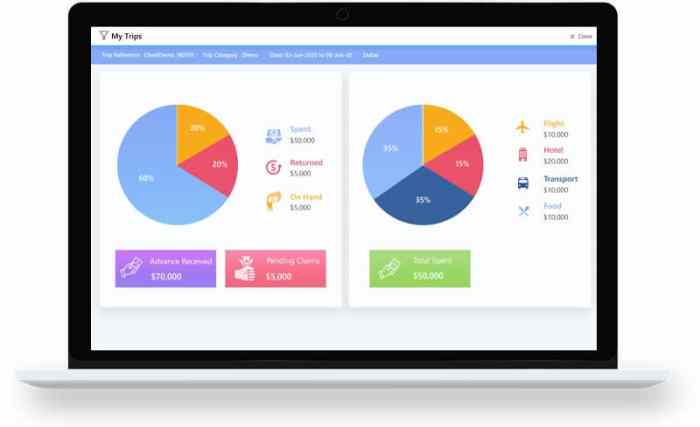
A travel expense management system (TEMS) is a software application designed to streamline and automate the process of tracking, reporting, and managing travel expenses. It helps organizations effectively control costs associated with business trips while ensuring compliance with company policies and regulations.
TEMS are increasingly popular due to their ability to automate tasks, reduce manual errors, and provide real-time visibility into travel spending. This efficiency translates into significant cost savings and improved financial management for businesses.
Key Functionalities of a Typical TEMS
A TEMS typically offers a suite of functionalities to manage the entire travel expense lifecycle. These include automated expense reporting, receipt scanning and storage, expense approval workflows, and detailed reporting and analysis. Crucially, TEMS often integrate with booking platforms, enabling seamless expense tracking from the initial trip planning phase.
- Automated Expense Reporting: The system automatically captures and categorizes expense data, reducing the need for manual entry. This minimizes errors and ensures consistent reporting.
- Receipt Management: TEMS typically include features for digitizing receipts, storing them securely, and associating them with specific expenses. This facilitates quick access and verification.
- Approval Workflows: A defined approval process ensures that all expenses are reviewed and authorized by the appropriate personnel, aligning with company policies.
- Detailed Reporting and Analysis: Comprehensive reporting capabilities provide insights into spending patterns, identify cost-saving opportunities, and facilitate compliance checks.
Common Use Cases Across Industries
TEMS are applicable across various industries, offering streamlined expense management.
- Hospitality: Hotels and restaurants utilize TEMS to manage employee travel expenses, ensuring accurate and timely reimbursement.
- Technology: Tech companies leverage TEMS to track and manage expenses related to conferences, training, and client meetings.
- Finance: Financial institutions use TEMS for managing travel expenses for their staff, improving financial control and compliance.
- Consulting: Consulting firms utilize TEMS to track and manage travel expenses for consultants and project teams, enhancing cost visibility and reporting.
Benefits of Using a TEMS
Implementing a TEMS offers numerous benefits compared to manual expense tracking.
- Reduced Manual Effort: TEMS automate the expense tracking process, reducing the administrative burden on staff and freeing up valuable time.
- Improved Accuracy: Automation minimizes manual errors, leading to more accurate expense reports and reimbursements.
- Enhanced Compliance: TEMS often incorporate features that ensure compliance with company policies and regulations, minimizing potential financial risks.
- Cost Savings: By streamlining processes and minimizing errors, TEMS contribute to cost savings for organizations.
- Real-time Visibility: TEMS provide real-time visibility into travel spending, enabling informed decision-making and budget control.
Types of Travel Expenses
The following table Artikels the common types of travel expenses:
| Expense Category | Description |
|---|---|
| Airfare | Cost of air travel, including tickets, fees, and taxes. |
| Accommodation | Expenses related to lodging, such as hotel stays, rental cars, and other accommodations. |
| Meals | Expenses incurred for food and beverages during the trip. |
| Transportation | Costs associated with transportation within the destination, such as taxis, public transport, and car rentals. |
| Other Expenses | Miscellaneous expenses like incidentals, gratuities, and other relevant charges. |
Features and Functionality of TEMS
Travel Expense Management Systems (TEMS) are crucial for businesses seeking to streamline and optimize their travel spending. A robust TEMS provides a centralized platform for managing every aspect of employee travel, from initial planning to final reimbursement. This efficiency translates to cost savings, improved compliance, and a more positive employee experience.
A well-designed TEMS empowers businesses to maintain control over travel budgets, ensure adherence to company policies, and accurately track expenses. The core functionality encompasses various stages of the travel process, enabling businesses to effectively manage and report on their travel expenditures.
Core Features of a Robust TEMS
A robust TEMS possesses several key features that contribute to its effectiveness. These features ensure accurate expense reporting, seamless submission processes, and efficient approval workflows. Key components include real-time expense tracking, automated expense categorization, and integration with other business systems.
Automated Expense Reporting
Automated expense reporting is a cornerstone of a modern TEMS. This feature streamlines the entire process, reducing manual data entry and the potential for errors. By automatically categorizing expenses based on predefined rules and policies, TEMS significantly reduces administrative burden. This automation also enhances accuracy and speed in the reporting process, enabling swift reimbursements and preventing delays. For example, if a company policy dictates that mileage expenses are recorded using a specific rate per mile, the TEMS can automatically apply that rate to the reported mileage, preventing manual calculation errors.
Expense Submission and Approval Process
The expense submission and approval process within a TEMS is typically a multi-step procedure. Employees submit their expense reports electronically, attaching supporting documentation. The system then routes these reports to designated approvers, who can review the details, approve or reject the expenses. This system ensures transparency and accountability. The system can also flag expenses that deviate from company policy, prompting approvers to take action. Examples include exceeding predefined daily allowances or inappropriate expense categories.
Integration with Other Business Applications
A significant advantage of a TEMS is its ability to integrate with other business applications. This integration can streamline workflows and data exchange. For example, seamless integration with a company’s booking system allows for automatic synchronization of travel arrangements and related expenses. This feature ensures that travel details are correctly linked to expenses, enhancing data accuracy and reducing the likelihood of errors. Further, integration with payroll systems allows for automated reimbursement processing.
Tracking and Managing Travel Policies
TEMS enable businesses to effectively track and manage travel policies. This feature allows for the creation, modification, and enforcement of company-specific policies concerning travel expenses. The system can store policy details, like allowable travel modes, maximum daily allowances, and acceptable lodging categories. These policies are readily accessible to employees, and the TEMS can automatically flag expenses that violate these policies, ensuring compliance. This also enhances transparency and reduces ambiguity surrounding company travel policies.
Comparison of TEMS Features
| Feature | TEMS A | TEMS B | TEMS C |
|---|---|---|---|
| Automated Expense Categorization | Yes (Advanced rules) | Yes (Basic rules) | No |
| Integration with Booking Systems | Yes | Yes | Partial |
| Policy Management | Comprehensive | Basic | Limited |
| Mobile Expense Reporting | Yes | Yes | No |
| Real-time Reporting | Yes | Yes | No |
This table provides a basic comparison of three TEMS in the market. Features like automated expense categorization, integration with booking systems, and comprehensive policy management are crucial for a modern TEMS.
Implementation and Integration
Implementing a Travel Expense Management System (TEMS) within an organization requires a structured approach. A successful implementation hinges on careful planning, effective communication, and thorough training to ensure seamless adoption and optimal utilization. The integration with existing accounting systems also needs careful consideration to minimize disruption and maximize data consistency.
Steps Involved in Implementing a TEMS
The implementation process typically involves several key steps. First, a comprehensive needs assessment identifies the specific requirements and desired functionalities of the TEMS. Next, careful selection of a suitable TEMS provider and system configuration follows. This involves evaluating different vendors, considering factors such as scalability, security, and cost. Third, meticulous data migration planning is critical to ensure minimal disruption and accurate data transfer. Finally, a comprehensive training program is crucial to ensure employee proficiency in utilizing the system, which often includes hands-on tutorials and user manuals.
Employee Training Methods
Effective training is essential for successful TEMS adoption. Various methods can be used to equip employees with the necessary skills. These include interactive workshops, online tutorials, and hands-on demonstrations. Regular follow-up sessions and readily available support resources further enhance employee understanding and proficiency. Comprehensive user manuals and FAQs should be easily accessible.
Data Migration from Legacy Systems
Migrating data from legacy systems to a new TEMS necessitates a well-defined strategy. This involves careful assessment of the existing data format, a detailed mapping of fields, and validation procedures to ensure accuracy and consistency. Data cleansing and transformation processes should be implemented to resolve potential inconsistencies. Import/export tools from the old system and the new TEMS should be carefully used to automate the transfer process and minimize human errors. Test data sets should be used to verify data accuracy before migrating the full dataset.
Potential Challenges During Implementation and Solutions
Implementation often faces challenges, such as resistance to change, inadequate training, or data inconsistencies. Addressing employee concerns and providing clear communication strategies can mitigate resistance. Thorough training programs, coupled with continuous support, ensure user confidence and proficiency. Implementing a robust data validation process and using quality control measures during data migration helps in maintaining data accuracy and minimizing errors.
Integration with Existing Accounting Software
Integrating a TEMS with existing accounting software is crucial for seamless data flow. This typically involves configuring the TEMS to export data in a format compatible with the accounting system. API integrations allow for automated data transfer, minimizing manual intervention and ensuring real-time data synchronization. Collaboration between the TEMS provider and the accounting software vendor is crucial to ensure compatibility.
Data Formats Supported by a TEMS
- A TEMS should support various data formats for seamless data exchange and integration with other systems. Common formats include CSV, XML, JSON, and SQL databases. Support for these formats enables easy data transfer between different applications and ensures compatibility with other business processes.
| Data Format | Description |
|---|---|
| CSV (Comma Separated Values) | A simple text-based format that is widely used for data exchange. |
| XML (Extensible Markup Language) | A markup language that defines a structured format for data exchange. |
| JSON (JavaScript Object Notation) | A lightweight data-interchange format. |
| SQL Databases | Relational databases that store data in tables and relationships. |
User Experience and Interface
A well-designed user interface is crucial for a successful Travel Expense Management System (TEMS). A user-friendly interface significantly impacts user adoption and system efficiency. The system should be intuitive and cater to various user roles, ensuring a seamless experience for everyone. This section details the design principles and functionalities that will enhance the user experience.
Simplified User Interface Design
The TEMS should adopt a clean and minimalist design aesthetic. Clear labeling, consistent formatting, and readily available help resources are paramount. Employing a familiar layout and intuitive navigation will minimize user frustration and encourage faster adoption.
User-Friendly Features for Efficiency
Implementing features like automated expense categorization, real-time reporting, and integrated payment options significantly boosts efficiency. For instance, automatic categorization of receipts based on predefined criteria minimizes manual data entry. This automation frees up valuable time for other tasks.
Interface Tailored to Various User Roles
The system should accommodate different user roles, such as administrators, managers, and expense submitters. Administrators will have broader access to system configuration and data analysis tools. Managers will oversee expense reports and approvals, while expense submitters will have access to expense submission forms and tracking. Role-based access controls will ensure data security and prevent unauthorized access.
Handling Different Travel Types
The system should differentiate between business and personal travel expenses. Clear categorization and distinct reporting features for each type will ensure accurate financial tracking and compliance. For instance, business travel expenses can be categorized by project or client, while personal expenses can be grouped by category.
Intuitive Navigation Examples
The system should feature a clear navigation structure. Use a well-organized menu system with clear labels. Employ a consistent layout across different screens. For example, a “Dashboard” screen can provide an overview of recent expenses, pending approvals, and outstanding reports. A “Submit Expense” module should have clear steps for uploading receipts and entering details. A “Report” section should offer various reports, such as expense summaries, expense breakdowns by category, and trip-specific reports.
User Roles and Access Privileges
| User Role | Access Privileges |
|---|---|
| Administrator | Full access to all modules, system configuration, user management, report generation, and data analysis. |
| Manager | Expense report review, approval, and reporting; access to specific user expense submissions. |
| Expense Submitter | Expense submission, tracking of submitted expenses, viewing expense report status, and updating expense details. |
Security and Compliance
Source: angleritech.com
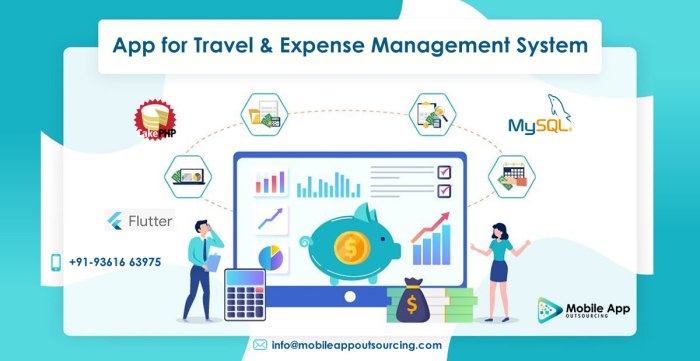
Protecting sensitive travel expense data is paramount in a Travel Expense Management System (TEMS). Robust security measures and adherence to compliance regulations are crucial to maintain data integrity, prevent fraud, and uphold the organization’s reputation. This section details the critical security aspects of a TEMS.
Data security in a TEMS is not just a desirable feature, but a fundamental requirement. Breaches can lead to significant financial losses, reputational damage, and legal repercussions. The system must be designed with a layered approach to security, encompassing access controls, data encryption, and regular security audits.
Importance of Data Security in a TEMS
A secure TEMS safeguards confidential financial information, including employee travel details, expense reports, and payment transactions. Compromised data can result in unauthorized access, modification, or deletion of records, leading to inaccurate financial reporting, potential fraud, and non-compliance with regulations. Protecting data is essential to maintain the trust and confidence of employees and stakeholders.
Compliance Requirements for Travel Expenses
Compliance with accounting standards, internal policies, and relevant regulations is critical. This involves adhering to local tax laws, expense reporting policies, and internal controls. Non-compliance can lead to penalties, audits, and legal action. Thorough documentation of expenses and adherence to company policies is vital.
Maintaining Data Integrity and Confidentiality
Maintaining data integrity and confidentiality is achieved through several measures. These include strong access controls, robust encryption protocols, and regular security audits. Data encryption protects sensitive information even if the system is compromised. Regular backups ensure data recovery in case of system failure.
Security Measures Implemented in a TEMS
Implementing a multi-layered security approach is essential. The following table summarizes the security measures incorporated into a typical TEMS.
| Security Measure | Description |
|---|---|
| Access Control | Restricting access to sensitive data based on user roles and permissions. |
| Data Encryption | Encoding data to prevent unauthorized access. |
| Regular Security Audits | Periodic review of system security to identify and address vulnerabilities. |
| User Authentication | Implementing multi-factor authentication for enhanced security. |
| Data Backup and Recovery | Regularly backing up data and having a disaster recovery plan in place. |
Ensuring Adherence to Accounting Standards
Adherence to accounting standards is ensured through the system’s design and functionality. The system must allow for the proper categorization of expenses, supporting documentation, and compliance with relevant accounting principles. This includes features that automatically categorize expenses, validate receipts, and ensure proper record-keeping.
Data Encryption Techniques in a TEMS
Data encryption protects sensitive information. Advanced encryption standards, such as AES-256, are crucial for safeguarding data both in transit and at rest. This ensures confidentiality even if the system or data storage is compromised. The system should use strong encryption algorithms to protect against various attacks.
Cost and Return on Investment (ROI)
Implementing a Travel Expense Management System (TEMS) requires careful consideration of costs and the potential return on investment. Understanding the factors influencing the cost and developing a robust ROI calculation are crucial for a successful implementation. This section details these aspects, comparing manual expense management to a TEMS, and highlighting long-term financial benefits.
Factors Influencing TEMS Cost
Various factors contribute to the overall cost of a TEMS. These include software licensing fees, implementation and integration costs, ongoing maintenance and support, user training, and potential hardware upgrades. Vendor selection, the scope of features required, and the size of the organization also play a significant role. The choice between cloud-based and on-premises solutions will also impact the overall cost.
Methods for Calculating TEMS ROI
Calculating the ROI of a TEMS involves quantifying the benefits against the associated costs. A common approach involves estimating the potential savings in administrative time, reduced errors, and improved expense reporting accuracy. A formula often used is:
(Total Savings – Total Costs) / Total Costs
This formula calculates the return on investment by comparing the net savings to the total costs of implementation and maintenance. Consider using a time-based approach, assessing how much time is saved by employees and management staff through automated expense reports, approvals, and reconciliation. This time savings can then be translated into monetary value.
Comparison of Manual and TEMS Expense Management
Manual expense management often results in significant administrative overhead. Expense reports are prone to errors, leading to delays in reimbursement, and increased staff time spent on processing and reconciliation. TEMS automate these processes, reducing errors and freeing up valuable time for other tasks. For example, manual processing of expense reports often requires multiple approvals, creating delays and potentially increasing the likelihood of errors. TEMS streamline this process, leading to faster and more accurate reimbursements.
Examples of TEMS-Driven Administrative Overhead Reduction, Travel expense management system
TEMS automate various aspects of the expense management process, directly impacting administrative overhead. These include automated expense reporting, streamlined approval workflows, and integrated expense tracking. By eliminating manual tasks, TEMS free up valuable time for employees and management staff. For example, a company that previously spent two hours per expense report on processing and reconciliation could see a significant reduction in administrative overhead with a TEMS.
Long-Term Financial Benefits of a TEMS
Beyond immediate savings, TEMS offer long-term financial benefits. These include improved expense reporting accuracy, compliance with accounting standards, and the potential for cost savings in the future. TEMS provide an organized and accessible database of all travel expenses, making it easier to analyze trends and optimize future travel budgets.
Potential Cost Savings with Different TEMS Packages
| TEMS Package | Initial Setup Cost | Annual Maintenance Cost | Potential Yearly Savings |
|---|---|---|---|
| Basic | $1,500 | $500 | $2,000 |
| Standard | $3,000 | $1,000 | $5,000 |
| Premium | $5,000 | $2,000 | $10,000 |
Note: These figures are illustrative examples and may vary based on specific needs and vendor agreements.
Future Trends and Developments
Travel expense management systems (TEMS) are constantly evolving to meet the dynamic needs of modern businesses. Emerging technologies are driving significant changes, offering enhanced efficiency, improved security, and greater transparency. This evolution is impacting how companies manage and track travel expenses, ultimately influencing the bottom line.
Emerging Trends in Travel Expense Management
TEMS are increasingly integrating with other business applications, such as project management software and accounting platforms. This integration streamlines workflows and improves data sharing across departments. Furthermore, there’s a growing emphasis on personalized expense reporting and analysis, tailoring the system to individual user needs and preferences.
Potential Impact of AI and Automation on TEMS
AI-powered tools are revolutionizing TEMS by automating various tasks. These include automated expense categorization, receipt validation, and even intelligent travel booking integrations. This automation reduces manual effort, minimizes errors, and allows for faster processing of expense reports. For example, AI can identify patterns in past travel expenses, suggesting optimal travel routes or negotiating better deals.
Integration of Mobile Technology in TEMS
Mobile-first TEMS are becoming more prevalent. Mobile apps provide users with the flexibility to submit expense reports, manage travel bookings, and access real-time expense data from anywhere, at any time. This accessibility empowers employees and streamlines the entire expense reporting process, ensuring greater efficiency and time savings.
Role of Cloud Computing in Travel Expense Management
Cloud-based TEMS offer significant advantages, including scalability, accessibility, and cost-effectiveness. Data is stored securely in the cloud, accessible to authorized personnel across geographical locations. This ensures data redundancy and disaster recovery, enhancing overall system reliability. Cloud-based systems also often integrate seamlessly with other cloud-based business applications.
Enhancement of Security and Transparency with Blockchain Technology
Blockchain technology is poised to enhance the security and transparency of TEMS. Its decentralized and immutable nature ensures that expense records are verifiable and tamper-proof. This creates a secure environment for financial transactions, minimizing fraud and improving auditability. Furthermore, the transparency of blockchain allows for greater oversight and accountability throughout the expense management process.
Key Future Developments in the TEMS Landscape
| Development Area | Description |
|---|---|
| AI-driven Automation | Automation of expense categorization, receipt processing, and travel booking integration using AI algorithms, leading to faster and more accurate expense reports. |
| Mobile-First Approach | Mobile applications are prioritized for streamlined expense reporting, travel booking, and real-time data access. |
| Cloud-Based Integration | TEMS are increasingly integrated with other cloud-based business applications, improving data sharing and workflow efficiency. |
| Blockchain Implementation | Blockchain technology is adopted to enhance the security and transparency of expense records, minimizing fraud and improving auditability. |
| Personalized Expense Management | Systems are customized to individual user preferences, offering tailored expense reporting and analysis features. |
Final Review: Travel Expense Management System
In conclusion, a travel expense management system offers a powerful solution for managing travel-related expenses effectively. This comprehensive guide has explored the intricacies of TEMS, from fundamental concepts to advanced functionalities and future prospects. By understanding the key features, implementation considerations, and long-term benefits, organizations can make informed decisions about adopting a TEMS, ultimately streamlining their travel expense management and maximizing their return on investment. The future of travel expense management lies in adopting systems that are not only efficient but also adaptable to evolving needs and technologies.