Online Corporate Travel Booking Streamlined Solutions
Online corporate travel booking is revolutionizing how businesses manage employee travel. From cumbersome paper-based systems to sophisticated online platforms, the evolution of corporate travel booking has streamlined the process, making it easier for both companies and employees. This comprehensive overview explores the key features, benefits, and future trends of these online booking systems, offering insights into their functionality, user experience, and integration with existing business tools.
Modern online corporate travel booking platforms offer a plethora of functionalities, from booking flights and hotels to managing expenses and adhering to company policies. They empower businesses to optimize travel budgets, enhance employee satisfaction, and ensure compliance with relevant regulations. This detailed exploration dives into the intricacies of these systems, highlighting their benefits and potential challenges.
Introduction to Online Corporate Travel Booking
Online corporate travel booking platforms have revolutionized the way businesses manage and optimize their travel expenses. These platforms offer a centralized system for employees to book travel arrangements, allowing for greater control, cost savings, and improved compliance. They provide a significant departure from traditional methods, which often involved multiple phone calls, emails, and manual record-keeping.
The evolution of corporate travel booking has been marked by a shift from manual processes to automated systems. Early methods relied on travel agents, who often lacked a comprehensive view of the company’s travel policies and preferences. This often led to inconsistencies in booking practices, increased costs, and difficulties in managing travel expenses. The rise of online platforms addressed these shortcomings, enabling companies to establish clear booking policies, track expenses efficiently, and negotiate favorable rates.
Key Functionalities of Online Corporate Travel Booking Systems
Online corporate travel booking systems are designed with a suite of functionalities that streamline the entire travel process. These systems typically allow employees to search for and compare flight, hotel, and car rental options based on pre-defined company preferences. Crucially, these systems are integrated with company travel policies and expense reporting tools, enabling automated compliance and accurate expense tracking.
Types of Travel Bookings
A well-designed online corporate travel booking system should facilitate different types of travel bookings. This encompasses various travel needs.
| Booking Type | Description |
|---|---|
| Flights | Booking flights for employees, typically including features for searching, comparing, and booking flights based on specific criteria such as price, airline, departure/arrival times, and layovers. |
| Hotels | Booking hotel accommodations, often incorporating features for searching, comparing, and booking hotels based on criteria like location, star rating, amenities, and availability. |
| Car Rentals | Booking car rentals, typically encompassing features for searching, comparing, and reserving vehicles based on criteria such as type, location, and rental duration. |
Features and Benefits of Online Booking: Online Corporate Travel Booking
Online corporate travel booking systems offer a streamlined and efficient solution for businesses, improving both cost management and employee experience. These platforms allow for centralized control, enhanced flexibility, and improved communication throughout the travel process.
Modern travel management systems (TMS) are transforming how corporations handle travel arrangements, providing a range of benefits that were previously unattainable with manual methods. This evolution has led to increased efficiency, cost savings, and a superior travel experience for employees.
Advantages for Businesses
Centralized management of travel arrangements significantly improves cost control. By consolidating all bookings in one system, corporations gain greater visibility into travel spending and can implement cost-saving strategies. Detailed reporting and analytics empower businesses to identify trends and optimize their travel budgets.
Benefits for Employees
Online booking systems empower employees with greater control over their travel arrangements. Intuitive interfaces allow employees to easily book flights, hotels, and rental cars, saving time and effort. Real-time availability and flexible booking options offer employees a convenient and user-friendly experience. This enhanced user experience, in turn, contributes to increased employee satisfaction.
Enhanced Cost Control and Efficiency
Online booking systems are instrumental in streamlining travel processes, thereby increasing efficiency. Automated expense report generation and integration with accounting systems reduce manual work and expedite reimbursement procedures. Policies can be implemented and enforced with greater ease, and the system’s reporting tools provide data-driven insights into travel patterns, helping to identify potential cost savings and areas for improvement. For example, a company might find that employees frequently book flights on budget airlines, leading to significant cost reductions.
Streamlining the Travel Booking Process
Specific features streamline the travel booking process, creating a more efficient and transparent workflow. Expense report integration, for instance, automatically populates expense reports with booking details, reducing manual data entry and facilitating quicker reimbursements. Policy management tools ensure compliance with corporate travel policies, minimizing potential errors and risks. These features reduce administrative burdens, free up resources, and create a more organized approach to travel management.
Comparison of Online Booking Platforms
Several online booking platforms cater to corporate travel needs, each offering unique features and benefits. A comparative analysis helps businesses choose the best platform for their specific requirements. Different platforms may have varying strengths, including specific integrations with existing business systems, or unique pricing models.
| Platform | Features | Pricing | User Reviews |
|---|---|---|---|
| Platform A | Advanced reporting, robust expense management, integration with various systems. | Tiered pricing based on volume and features. | High user satisfaction; praised for ease of use and powerful reporting. |
| Platform B | Simple interface, quick booking process, emphasis on budget-friendly options. | Flat-rate pricing; may not be suitable for large corporations. | Positive reviews for ease of use and competitive pricing. |
| Platform C | Focus on global travel, multilingual support, comprehensive policy management tools. | Pricing varies based on the size of the travel program. | Favorable reviews for international travel support and advanced features. |
User Experience and Interface Design
A seamless and intuitive user experience is paramount for online corporate travel booking platforms. A well-designed interface streamlines the booking process, minimizing errors and maximizing efficiency for busy travel managers. This directly translates to cost savings and improved employee satisfaction.
A user-friendly interface is crucial for corporate travel booking, reducing the time spent on the platform and the likelihood of mistakes. This ultimately lowers administrative costs and enhances the overall travel experience.
Importance of a User-Friendly Interface
A user-friendly interface significantly impacts the speed and accuracy of bookings. Clear navigation, intuitive layouts, and easily accessible information contribute to a positive user experience. This positive experience, in turn, encourages frequent use and fosters trust in the platform.
Key Elements for a Positive User Experience
Several elements contribute to a positive user experience. These include clear and concise language, readily available help resources, and visually appealing design elements. Consistent branding and a logical layout further enhance the user experience. A well-structured interface with a logical flow of information ensures users can find the necessary details quickly and easily.
Impact of Design Elements on Booking Speed and Accuracy
Visual design choices directly influence booking speed and accuracy. Color schemes, font choices, and layout all contribute to the overall usability. A clear hierarchy of information helps users navigate the platform effectively. Effective use of whitespace and appropriate spacing further improves readability and reduces cognitive load. A visually appealing, yet functional, interface is crucial for a positive experience.
Mobile-Friendliness for Corporate Travel
Mobile-friendliness is essential for corporate travel booking platforms. Travel managers often need to access and manage bookings on the go. A responsive design ensures a seamless experience across various devices, from desktop computers to tablets and smartphones. This allows users to book trips, view itineraries, and manage expenses regardless of their location.
Booking a Flight: Step-by-Step Process
A typical flight booking process involves these steps:
- Selecting the origin and destination airports.
- Specifying travel dates and times.
- Choosing the desired class of service.
- Reviewing available flight options and filtering by criteria (e.g., price, airline).
- Selecting the preferred flight and entering passenger details.
- Reviewing the booking summary and confirming the transaction.
Hotel Room Booking: User Interface Elements
The following table Artikels the user interface elements for booking a hotel room:
| Element | Description | Input Type |
|---|---|---|
| Hotel Name/Search Bar | Input field for searching hotel names or location | Text |
| Dates of Stay | Input fields for check-in and check-out dates | Date |
| Number of Guests | Input field for specifying the number of guests | Number |
| Room Type | Dropdown menu to select room type | Dropdown |
| Search Button | Initiates the search for available rooms | Button |
| Results Display | Displays available rooms matching criteria | Table |
| Room Details | Information about each room, including amenities and price | Text, image |
| Booking Button | Initiates the booking process | Button |
| Confirmation | Displays the booking confirmation details | Text |
Integration and Technology
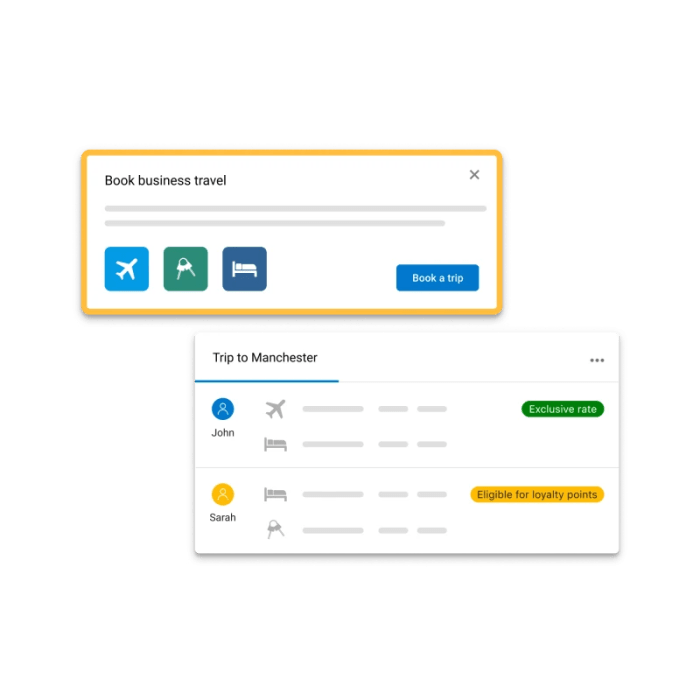
Source: booking.com
Modern corporate travel booking platforms require seamless integration with existing business systems to maximize efficiency and minimize manual effort. This integration extends beyond simple booking and encompasses data exchange, expense management, and approval workflows, all while adhering to robust security protocols. Effective integration ensures real-time data synchronization and reduces administrative overhead, ultimately saving valuable time and resources.
Integration with Existing Business Systems
Integrating an online corporate travel booking platform with existing systems is crucial for streamlining workflows and avoiding data silos. This integration can occur through various methods, each tailored to specific business needs and existing technological infrastructure. Direct API connections, custom scripting, and third-party integrations are common strategies. Each method offers a unique approach to data exchange and system compatibility.
Role of APIs and Data Exchange
Application Programming Interfaces (APIs) play a vital role in streamlining the booking process by enabling seamless data exchange between the travel booking platform and other business systems. APIs facilitate automated data transfer, reducing manual input and minimizing errors. Real-time updates on booking status, expense reports, and approval workflows are all possible with efficient API implementation. This automated data exchange dramatically enhances efficiency and reduces the risk of human error.
Integration with Accounting and Expense Management Tools
Integrating the travel booking platform with accounting and expense management software is essential for accurate expense tracking and reporting. Automated expense reports and reconciliation can be generated directly from travel bookings, eliminating manual data entry and improving accuracy. This integration streamlines the entire expense management cycle, reducing the time and resources dedicated to expense processing. This approach ensures a direct flow of data from booking to accounting, enabling accurate financial reporting.
Impact on Travel Booking Approval Processes
Online booking platforms can significantly impact travel booking approval processes by automating workflows. For instance, pre-approved travel policies can be integrated, ensuring that only authorized bookings are made. Automated notifications can alert approvers about pending requests, enabling faster approvals. This automation reduces the time required for approvals and ensures compliance with company policies. In addition, these systems can provide real-time visibility into pending approvals, enabling better management of travel requests.
Security Protocols for Sensitive Data
Protecting sensitive corporate data is paramount in any online corporate travel booking system. Strong security protocols are essential to ensure data confidentiality, integrity, and availability. These protocols include encryption, secure authentication methods, and access controls to safeguard sensitive information. Compliance with relevant data protection regulations (like GDPR) is also crucial for maintaining trust and avoiding potential penalties. Advanced security measures, such as multi-factor authentication, further enhance data protection.
Various Integrations Available
| Integration Type | Description | Benefits |
|---|---|---|
| API Integration | Direct connection using Application Programming Interfaces. | Seamless data exchange, real-time updates, enhanced automation. |
| Custom Scripting | Developing custom scripts to integrate with existing systems. | Tailored integration for specific business needs, high level of customization. |
| Third-Party Integrations | Utilizing pre-built connectors from third-party providers. | Faster implementation, often pre-tested integrations, reduces development time. |
| Accounting Software Integration | Connecting with accounting software for expense tracking and reporting. | Automated expense reporting, improved accuracy, reduced manual effort. |
| Expense Management Tool Integration | Connecting with expense management software for better expense tracking. | Automated expense processing, simplified expense claims, enhanced reconciliation. |
Security and Compliance

Source: itilite.com
Robust security and compliance are paramount for online corporate travel booking systems. Trust and confidence in the system are directly linked to the assurance that sensitive data is protected and that the platform adheres to all relevant regulations. A secure and compliant platform fosters a positive user experience, reduces risk, and ultimately strengthens the company’s reputation.
Importance of Security Measures
Protecting sensitive data, including financial information and employee details, is crucial. A breach could lead to significant financial losses, reputational damage, and legal repercussions. Strong encryption protocols, secure authentication methods, and regular security audits are essential components of a robust security framework. These measures mitigate the risk of unauthorized access, data breaches, and fraudulent activities.
Compliance with Regulations and Policies
Adherence to relevant regulations, such as data privacy laws (e.g., GDPR, CCPA), industry standards, and company policies, is essential. Compliance ensures legal operation and protects the organization from potential penalties. This includes the proper handling of personal data, ensuring transparency, and maintaining accountability for all transactions. Non-compliance can result in significant legal and financial consequences.
Examples of Security Protocols
Reputable online travel booking platforms employ various security protocols to protect user data. These include robust encryption methods (like TLS/SSL), multi-factor authentication (MFA), regular security audits, and intrusion detection systems. Secure payment gateways are also vital for processing transactions safely and securely.
Compliance Features for Risk Management
Compliance features within the booking system actively contribute to risk management. Automated checks for policy violations, real-time alerts for suspicious activities, and detailed audit trails help identify and address potential risks proactively. These features are integral in minimizing the chances of errors and incidents, and streamline risk response procedures.
Ensuring Adherence to Company Policies and Budgets
The system should integrate mechanisms to ensure adherence to company travel policies and budgetary constraints. Pre-approved vendor lists, automated cost comparisons, and customizable reporting tools allow for real-time monitoring and control over travel expenses. This minimizes overspending and ensures adherence to company policies regarding preferred vendors, preferred class of service, or other restrictions.
Table Comparing Security Measures
| Platform | Encryption | Authentication | Compliance Features | Audit Trails |
|---|---|---|---|---|
| Platform A | TLS 1.3 | Two-factor authentication | GDPR, CCPA compliant | Detailed, searchable |
| Platform B | TLS 1.2 | Single-factor authentication | IATA standards compliant | Basic, limited search |
| Platform C | TLS 1.3 | Biometric authentication | Travel agency compliance | Comprehensive, real-time |
Note: This table provides a simplified comparison. Specific features and levels of compliance may vary.
Cost Management and Reporting
Online corporate travel booking systems offer powerful tools for streamlining cost management and providing comprehensive reporting capabilities. These systems centralize travel data, enabling organizations to gain a clearer picture of their travel expenditures and identify areas for potential savings. This detailed control leads to more effective budget allocation and ultimately contributes to enhanced profitability.
Facilitating Cost Management
Online booking systems streamline the travel process, automating expense tracking and report generation. This automation reduces manual effort, minimizing errors and ensuring accuracy in expense documentation. By automating the entire process, from booking to reporting, companies can focus on more strategic tasks.
Tracking and Reporting Travel Expenses
These systems meticulously track every aspect of a trip, including flights, accommodations, ground transportation, and meals. Detailed records are stored in a centralized database, accessible to authorized personnel. This comprehensive data allows for precise expense analysis and reporting, facilitating accurate cost allocation.
Analyzing and Optimizing Travel Budgets
Data extracted from online booking platforms enables in-depth analysis of travel spending patterns. This analysis allows companies to identify cost-saving opportunities, such as negotiating better rates with preferred suppliers or choosing more economical travel options. This data-driven approach to travel budgeting allows for proactive adjustments and optimization of travel budgets, leading to better control over spending.
Generating Travel Expense Reports, Online corporate travel booking
Reporting features within online booking systems are crucial for generating detailed travel expense reports. These reports often include customizable options for filtering data, sorting by various criteria, and presenting the information in various formats, such as charts and graphs. This allows for targeted insights into specific areas of travel spending, enabling effective cost control. Specific reports can be tailored to reflect different departments, employees, or specific travel periods, providing a clear overview of spending patterns.
Utilizing Data for Future Budget Planning
Historical travel expense data, meticulously compiled by these systems, forms a crucial basis for future budget planning. Analyzing past trends, identifying seasonal fluctuations, and considering external factors allows for informed predictions about future travel costs. This forward-looking approach enables more accurate budget allocation and helps companies stay ahead of potential cost increases. By examining past expenditure data, organizations can forecast future travel costs with greater accuracy, ensuring the budget aligns with projected travel needs.
Examples of Reporting Tools
| Report Type | Description | Use Case |
|---|---|---|
| Employee Travel Expenses | Provides a detailed breakdown of each employee’s travel expenses, including dates, locations, and costs. | Track individual spending, identify potential cost overruns, and ensure compliance with company policies. |
| Departmental Travel Budgets | Summarizes travel expenses for each department, highlighting spending trends and potential cost savings opportunities. | Compare departmental spending, allocate budgets efficiently, and identify areas needing adjustments. |
| Travel Cost by Destination | Analyzes travel costs by specific destination, offering insights into pricing fluctuations and preferred locations. | Identify high-cost destinations, negotiate better rates with suppliers, and adjust future travel plans accordingly. |
| Travel Cost by Supplier | Tracks expenses associated with different travel providers, enabling a comparison of costs and service quality. | Evaluate supplier performance, choose preferred suppliers, and potentially negotiate better deals. |
| Trend Analysis Reports | Displays historical travel spending trends, revealing seasonal variations and cost fluctuations. | Identify potential cost saving strategies, adjust budget forecasts, and anticipate future needs. |
Future Trends and Developments
The online corporate travel booking landscape is constantly evolving, driven by technological advancements and changing business needs. This section explores emerging trends, the impact of new technologies, and innovative features shaping the future of corporate travel booking systems.
Future corporate travel booking platforms will increasingly integrate advanced technologies to enhance efficiency, reduce costs, and improve the overall user experience. Customization and personalization will play a key role in meeting specific business travel requirements.
Emerging Trends in Online Corporate Travel Booking
The industry is witnessing a shift towards greater integration of travel management systems (TMS) with other enterprise resource planning (ERP) systems. This integration streamlines data flow and improves overall operational efficiency. Moreover, the rise of sustainable travel options and the growing emphasis on responsible tourism are influencing the choices made by corporate travelers and businesses.
Impact of New Technologies
Artificial intelligence (AI) and machine learning (ML) are transforming corporate travel booking. AI-powered chatbots can assist with queries, offer personalized recommendations, and streamline the booking process. Real-time data analytics allow for more accurate forecasting and better cost management. Blockchain technology is also being explored for secure and transparent transactions.
Innovative Features
Several innovative features are being developed for future corporate travel booking systems. These include dynamic pricing algorithms that adjust based on real-time market fluctuations, automated expense reporting tools that integrate with accounting software, and interactive maps that provide real-time information on traffic conditions and potential delays.
Customization and Personalization
Future platforms will prioritize customization and personalization. Users will be able to tailor their booking experiences to specific preferences, including preferred airlines, hotels, and travel styles. These systems will also incorporate pre-approved vendor lists, travel policies, and preferred suppliers, reducing the time and effort involved in the booking process.
Data Analytics and AI
Data analytics and AI are being increasingly incorporated into travel booking systems. AI algorithms can predict optimal travel dates and times, identify potential cost savings, and suggest alternatives based on historical data and user preferences. Machine learning models can analyze large datasets to identify patterns and trends, enabling proactive management of travel budgets and optimizing travel plans.
Potential Future Features
| Feature | Description |
|---|---|
| AI-powered Trip Optimization | AI algorithms analyze historical data, real-time conditions (traffic, flight delays), and user preferences to optimize travel plans and minimize costs. |
| Predictive Analytics for Cost Management | Sophisticated models forecast potential costs based on historical data, market trends, and user behavior, enabling proactive cost control. |
| Integration with Sustainability Platforms | Linking booking systems with platforms that provide carbon footprint calculations and alternative sustainable travel options, enabling environmentally conscious travel choices. |
| Personalized Travel Recommendations | AI-powered systems offer tailored recommendations based on user preferences, past travel history, and business objectives, optimizing travel experiences. |
| Automated Expense Reporting | Streamlined integration with accounting software allows for automated expense reporting, reducing manual data entry and errors. |
Last Point

Source: internationaltravelhouse.in
In conclusion, online corporate travel booking systems have become indispensable tools for modern corporations. By integrating seamlessly with existing business processes, these platforms offer significant advantages in terms of cost control, efficiency, and employee satisfaction. As technology continues to evolve, the future of online corporate travel booking promises even greater innovation and customization, further enhancing the experience for both businesses and their travelers.