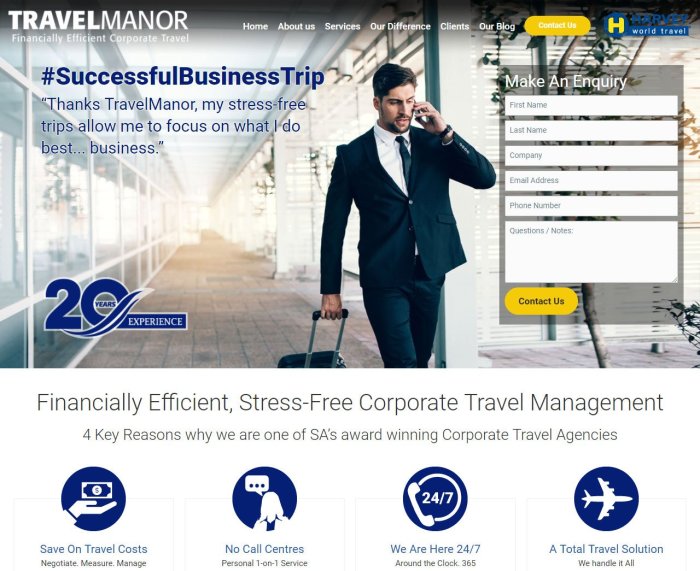
Business Travel Booking Service Streamlined Solutions
Business travel booking service is transforming how companies manage their employee travel. It streamlines the entire process, from initial booking to expense reporting. This comprehensive overview delves into the core functionalities, benefits, and challenges associated with these modern tools.
From corporate travel management systems to online travel agencies, various platforms cater to different business needs. This exploration examines the evolution of these services, highlighting key features and benefits for both businesses and travelers. We’ll also explore the future of business travel booking, considering emerging technologies and evolving trends.
Overview of Business Travel Booking Services
Business travel booking services are crucial for companies seeking streamlined and cost-effective travel arrangements for their employees. These services encompass a wide range of functionalities, from initial booking to post-trip reporting. They play a vital role in optimizing travel budgets and ensuring compliant travel policies are followed.
These services facilitate a more organized and efficient travel process, allowing businesses to manage expenses and maintain control over travel arrangements. This efficiency extends beyond the initial booking, often encompassing pre-trip approvals, expense reporting, and even employee feedback mechanisms.
Definition of Business Travel Booking Services
Business travel booking services are platforms designed to manage and facilitate the booking of travel arrangements for business purposes. These services typically cover flights, hotels, car rentals, and other travel-related needs. They often integrate with corporate travel policies and expense management systems, streamlining the entire travel process.
Key Functionalities of a Typical Business Travel Booking Service
These services offer a range of functionalities, enabling businesses to effectively manage their travel programs. These functionalities include: booking flights, hotels, and rental cars; managing travel policies and approvals; tracking expenses; providing reporting and analytics; and potentially offering recommendations for optimizing travel costs. Many also integrate with existing corporate systems, further enhancing efficiency and data collection.
Common Features and Benefits for Businesses
Utilizing business travel booking services provides several benefits to businesses. Key features and benefits include:
- Cost Savings: These services often leverage negotiated rates with airlines, hotels, and rental car companies, leading to significant cost reductions compared to individual bookings.
- Compliance Management: Travel policies can be embedded within the system, ensuring compliance with company regulations and minimizing potential risks.
- Enhanced Efficiency: Streamlined booking processes and automated reporting save time and resources, allowing employees to focus on core business activities.
- Data-Driven Insights: Detailed travel reports provide valuable data on travel patterns, expenses, and trends, enabling businesses to optimize their travel budgets and policies.
Evolution of Business Travel Booking Services
The evolution of business travel booking services has been marked by a shift from manual processes to sophisticated online platforms. Initially, travel agents and manual spreadsheets were the norm. Today, the integration of technology allows for real-time booking, dynamic pricing, and automated reporting, making the process significantly more efficient. The rise of corporate travel management systems (CTMS) and online travel agencies (OTAs) has significantly changed the landscape of business travel management.
Comparison of Business Travel Booking Platforms
| Feature | Corporate Travel Management Systems (CTMS) | Online Travel Agencies (OTAs) |
|---|---|---|
| Pricing | Typically negotiated rates and discounts | Publicly available rates, potentially competitive |
| Integration | Deep integration with existing corporate systems (e.g., expense reports) | Limited integration; often requires manual data entry |
| Control | Greater control over travel policies and approvals | Limited control over travel policies |
| Reporting & Analytics | Comprehensive reporting and analytics features | Basic reporting options, often requiring additional tools |
| Focus | Managing the entire travel process for a company | Facilitating bookings for individuals or small groups |
Benefits for Businesses
Business travel booking services offer significant advantages for companies of all sizes. By streamlining the complex process of travel arrangements, these services provide tangible benefits in cost savings, improved efficiency, and enhanced communication, ultimately leading to a more productive and cost-effective travel program. These services also contribute to better travel policy management and more efficient expense reporting.
Implementing a robust business travel booking system can dramatically improve operational efficiency, allowing employees to focus on core business functions instead of time-consuming travel arrangements. Companies can gain significant cost savings by optimizing travel decisions and avoiding unnecessary expenses.
Cost Savings
Travel booking services can reduce costs through negotiated rates with airlines, hotels, and rental car companies. These negotiated rates, often unavailable through individual bookings, lead to substantial savings. Companies can further reduce costs by enforcing travel policies, discouraging unnecessary or extravagant travel choices, and ensuring adherence to budget guidelines. For example, a company using a travel booking service might see a 15% reduction in average flight costs compared to individual bookings.
Improved Efficiency and Productivity
Utilizing business travel booking services leads to significant efficiency gains. Employees can quickly and easily book trips, reducing administrative overhead and freeing up valuable time for more important tasks. Travel arrangements are processed seamlessly, eliminating the need for manual intervention and ensuring accuracy. Real-time tracking of travel plans and updates ensures everyone is aware of the itinerary, facilitating better collaboration and reducing delays.
Enhanced Communication and Collaboration
These services facilitate seamless communication regarding travel plans. Real-time updates on flight status, hotel confirmations, and other details allow employees to stay informed and manage their schedules effectively. This enhanced communication improves collaboration among team members, fostering a more connected and efficient work environment. For example, if a flight is delayed, the system can instantly notify all relevant parties, preventing unnecessary anxiety and facilitating alternative arrangements.
Travel Policy Management
Business travel booking services allow companies to enforce travel policies effectively. These systems often integrate with existing company policies, ensuring compliance and preventing deviations. This feature is crucial for maintaining control over travel spending and ensuring that travel decisions align with corporate guidelines.
Streamlined Expense Reporting
Travel booking services often integrate with expense reporting systems. This integration automates the process of capturing travel expenses, reducing manual data entry and potential errors. Automated expense reports save time and resources, ensuring accurate and timely expense reimbursements.
Business Travel Management Software Options
| Software | Pros | Cons |
|---|---|---|
| Concur | Wide range of features, robust reporting, strong integrations, excellent customer support | Can be expensive, complex setup process |
| Sabre | Industry-leading technology, global reach, extensive travel options | High implementation costs, potential learning curve |
| Travelport | Excellent for large organizations, comprehensive travel options, global coverage | Requires significant investment, complex setup and management |
| TripIt | User-friendly interface, great for personal travel, integrates with other services | Limited reporting features, less robust for complex business travel needs |
| Expedia for Business | Ease of use, broad range of options, competitive pricing | May not offer the most tailored solutions for large or complex organizations |
Benefits for Travelers

Source: happay.com
Business travel booking services offer a streamlined and often more convenient experience for travelers. These platforms act as a central hub for managing all aspects of a trip, from initial booking to on-site support, enhancing the overall travel experience and reducing stress.
These services provide a comprehensive solution for travelers, addressing crucial aspects like booking, support, safety, and itinerary management. This simplifies the process of organizing business trips, allowing travelers to focus on their work and responsibilities.
Improved Traveler Experience
Booking services offer a user-friendly interface for searching, comparing, and booking flights, hotels, and other travel arrangements. This simplifies the often-complex process of planning trips, saving travelers valuable time and effort. They often integrate with preferred payment methods, streamlining the payment process. These services often provide real-time updates on flight status, hotel availability, and other relevant information.
Enhanced Support and Assistance
Booking services frequently offer 24/7 customer support, ensuring that travelers have access to assistance whenever needed. This is particularly crucial during unexpected issues, such as flight delays or cancellations. These services may also connect travelers with local contacts, such as airport representatives or hotel staff, providing personalized support and assistance during their trip. Examples include pre-arranged airport transfers, or assistance with local transportation.
Increased Security and Safety, Business travel booking service
Travel booking services often utilize secure payment gateways and encryption protocols to protect traveler data. This protects sensitive information from unauthorized access. Many services also offer travel insurance options or information about local safety concerns, providing travelers with valuable security measures. This can include advisories on local regulations, and crime rates.
Managing Travel Itineraries and Preferences
Booking services allow travelers to create personalized itineraries, accommodating their specific needs and preferences. This includes the ability to specify preferred flight times, hotel amenities, and meal choices. Travelers can save frequently used settings for future trips, and customize their preferred travel style. Travelers can also create and save multiple itineraries to easily switch between work or personal travel arrangements.
Comparison of Traveler Experiences Across Booking Services
| Booking Service | Ease of Booking | Support Availability | Security Measures | Itinerary Customization |
|---|---|---|---|---|
| Service A | Excellent, intuitive interface | 24/7 multilingual support | Advanced encryption, secure payment gateway | Highly customizable, allows for saving preferences |
| Service B | Good, clear layout | Limited hours, English-only support | Basic security measures | Limited customization options |
| Service C | Average, some confusion | Available during business hours | Standard security protocols | Basic itinerary management |
Note: This table provides a general comparison. Specific features and functionalities may vary depending on the individual booking service.
Challenges and Considerations

Source: skytouchtechnology.com
Business travel booking services, while offering significant advantages, also present certain challenges and considerations that businesses and travelers must be mindful of. These range from security concerns to the intricacies of regulatory compliance and the need for careful selection based on specific needs. Understanding these factors is crucial for a successful and secure travel experience.
Security Risks
Ensuring the security of sensitive business data and personal information is paramount when utilizing business travel booking services. Potential security risks include unauthorized access to account information, data breaches, and fraudulent activities. Cybersecurity threats, such as phishing scams and malware attacks, pose a significant risk to both the company and the traveler. Robust security protocols and encryption measures are essential to mitigate these risks.
Data Privacy and Security Protocols
Data privacy and security protocols are vital aspects of any business travel booking service. Companies must prioritize the protection of their sensitive data, including financial information, travel itineraries, and employee details. Compliance with data protection regulations, such as GDPR, is also crucial. A service that adheres to industry best practices and has demonstrably strong security measures is a significant factor in choosing a reliable provider.
Compliance with Travel Regulations and Policies
Compliance with travel regulations and company policies is essential for both operational efficiency and legal adherence. Travel booking services should provide tools and resources to help businesses manage compliance with local laws, visa requirements, and other regulations. Additionally, clear communication and adherence to company travel policies regarding expense reports and approvals are critical for internal controls and avoiding potential financial issues.
Choosing the Right Service Based on Specific Business Needs
Selecting the appropriate business travel booking service depends heavily on the specific needs and requirements of the organization. Factors like the size of the company, the frequency of travel, the desired level of customization, and budget considerations all play a role in this decision. A thorough evaluation of various services is necessary to find the optimal fit for individual needs.
Factors to Consider When Selecting a Business Travel Booking Service
| Factor | Description | Importance |
|---|---|---|
| Security Features | Robust encryption, multi-factor authentication, regular security audits, and incident response plans. | Crucial for protecting sensitive data and maintaining the confidentiality of travel arrangements. |
| Data Privacy Compliance | Adherence to relevant data protection regulations (e.g., GDPR, CCPA). Clear data handling policies. | Essential for maintaining compliance with legal obligations and building trust with travelers. |
| Travel Policy Integration | Ability to integrate with existing company travel policies, expense reporting systems, and approval workflows. | Ensures seamless data flow, streamlined expense management, and reduced administrative burden. |
| Customer Support | Availability of 24/7 support, responsive resolution of issues, and proactive assistance. | Critical for handling emergencies and ensuring smooth travel arrangements, especially in unforeseen circumstances. |
| Pricing and Fees | Transparent pricing structure, competitive rates, and clear fee disclosure. | Essential for budgetary planning and maximizing cost-effectiveness. |
| Customization Options | Flexibility in customizing travel arrangements, preferences, and reporting. | Allows businesses to tailor the service to meet specific needs and preferences. |
Technological Advancements
Modern business travel booking services are increasingly leveraging technological advancements to streamline processes and enhance the overall experience for both businesses and travelers. Artificial intelligence (AI) and automation are transforming the way bookings are managed, from initial searches to final confirmations. This shift towards digital solutions not only improves efficiency but also creates more personalized and responsive travel experiences.
The integration of cutting-edge technologies like AI-powered chatbots and automated travel policy enforcement is revolutionizing the business travel landscape. These advancements have the potential to significantly reduce administrative burdens and free up valuable time for businesses and travelers alike. The ability to quickly access real-time data, personalized recommendations, and seamless booking processes is a hallmark of these modern platforms.
Impact of AI on Booking Processes
AI is significantly impacting the efficiency of business travel booking services. AI-powered tools can analyze vast amounts of data, including historical booking patterns, traveler preferences, and real-time flight/hotel availability. This analysis enables the systems to proactively suggest optimal travel arrangements, potentially saving time and money. For example, AI algorithms can predict potential delays or disruptions and automatically adjust travel plans accordingly, minimizing the impact on the schedule.
Automation in Business Travel
Automation plays a crucial role in streamlining business travel booking processes. Automated systems can handle tasks such as booking flights, hotels, and ground transportation, reducing the need for manual intervention. Automated policy enforcement ensures that bookings align with company guidelines, mitigating potential compliance risks. This automation frees up valuable time for travel managers and reduces errors, improving overall accuracy and efficiency.
Enhanced Traveler Experience
Technological advancements have greatly improved the traveler experience. Real-time updates on flight status, hotel information, and travel advisories are readily available through mobile apps and online portals. Personalized recommendations based on past travel history and preferences can help travelers choose the best options for their needs. For instance, AI-powered chatbots can answer questions, provide instant support, and address issues in real-time, thus improving the overall traveler experience.
Comparison of Technological Solutions
| Technological Solution | Description | Benefits | Drawbacks |
|---|---|---|---|
| AI-powered Booking Engines | Utilize algorithms to analyze data and suggest optimal travel arrangements. | Personalized recommendations, reduced booking time, improved accuracy. | Potential for bias in algorithms, reliance on data quality. |
| Automated Policy Enforcement | Systems that automatically ensure bookings adhere to company travel policies. | Reduced compliance risks, improved cost control. | Potential for rigid enforcement, difficulty adapting to exceptional circumstances. |
| Real-time Tracking and Updates | Provide travelers with constant updates on flight and hotel information. | Improved visibility, enhanced traveler control. | Over-reliance on technology, potential for information overload. |
Future Trends: Business Travel Booking Service
The business travel booking landscape is poised for significant evolution, driven by shifting travel preferences, technological advancements, and a growing emphasis on sustainability. This dynamic environment demands adaptability and innovation from booking services to remain competitive and relevant. Forward-thinking companies are already incorporating these elements into their strategies, paving the way for a future where business travel is more efficient, sustainable, and integrated with overall business operations.
Potential Developments in Booking Services
The future of business travel booking services will likely see a greater emphasis on personalization and automation. Sophisticated algorithms will anticipate traveler needs, tailoring itineraries and recommendations based on historical data and preferences. This proactive approach will enhance the booking experience, reducing friction and optimizing travel plans. Furthermore, seamless integration with existing business applications, such as project management tools and expense reporting systems, will become standard, creating a more unified and efficient workflow.
Role of Sustainability and Environmental Consciousness
Sustainability is no longer a fringe consideration but a core value influencing business travel decisions. Booking services will play a crucial role in facilitating eco-conscious travel choices. Features like carbon offsetting calculators, options for sustainable transportation, and preferential pricing for environmentally friendly hotels will become increasingly common. Companies will prioritize services that offer transparent reporting on their environmental impact. This shift aligns with growing corporate social responsibility initiatives.
Adaptation to Changing Travel Trends
The industry will need to adapt to evolving travel trends. The rise of remote work and hybrid models is altering the frequency and nature of business travel. Booking services will need to accommodate flexible travel arrangements, including shorter trips and virtual meetings. The integration of virtual reality (VR) and augmented reality (AR) technologies for virtual site visits and immersive meetings is another promising trend. This adaptability is key to remaining relevant in the dynamic travel landscape.
Integration with Other Business Applications
Booking services will increasingly integrate with other business applications, creating a more holistic view of travel expenses and project management. Real-time data exchange between booking platforms and project management tools will allow for seamless tracking of travel costs, time zones, and team schedules. The automation of tasks, such as expense reporting and invoice processing, will further streamline workflows and improve efficiency.
Emerging Technologies Transforming the Industry
Several emerging technologies are poised to revolutionize business travel booking. AI-powered chatbots can handle queries, provide personalized recommendations, and automate booking processes. Blockchain technology has the potential to enhance transparency and security in travel transactions. Biometric authentication can improve the speed and security of check-in procedures. These technologies will enhance the user experience and streamline the entire travel process.
Case Studies
Real-world implementations of business travel booking services showcase their transformative potential for organizations. These case studies demonstrate the tangible benefits, highlighting cost savings, improved efficiency, and enhanced traveler experience. Examining successful implementations provides valuable lessons for businesses considering adopting these services.
Examining successful implementations of business travel booking services offers valuable insights into the tangible advantages they provide. Analyzing how companies optimized their travel management processes, reduced costs, and enhanced the traveler experience through these platforms can guide businesses in adopting such solutions.
Successful Implementations of Business Travel Booking Services
Implementing business travel booking services often yields impressive results. Successful deployments often demonstrate measurable improvements in efficiency, cost savings, and overall travel management. Consider the following examples.
- Company X: This multinational corporation transitioned to a cloud-based booking platform, streamlining the travel approval process. Prior to the implementation, travel requests often languished in email chains, resulting in delays and inefficiencies. The new system automated approvals and provided real-time visibility into travel costs. This led to a 25% reduction in average booking times and a 10% decrease in overall travel expenditures. This exemplifies how automated processes improve both efficiency and cost-effectiveness.
- Company Y: This mid-sized company, initially hesitant about adopting a centralized travel management system, saw significant improvements in traveler satisfaction and cost control after the implementation. The system integrated with their existing expense reporting tool, eliminating manual data entry and reducing errors. This integrated approach resulted in a 15% reduction in travel-related administrative costs and a marked increase in the positive feedback received from employees about the ease of booking and managing their trips.
Metrics for Measuring Success
Accurate measurement of success is critical in evaluating the efficacy of business travel booking services. Key metrics provide a structured approach to understanding the return on investment and the overall impact of the system.
| Metric | Description | Example Value |
|---|---|---|
| Average Booking Time | The time taken to complete a travel booking. | 2 days |
| Cost Per Trip | The total cost of a business trip, including airfare, accommodation, and other expenses. | $1,500 |
| Travel Agency Commission | Percentage of the travel cost paid to the booking agency. | 5% |
| Traveler Satisfaction | Rating of the ease and convenience of using the booking system. | 4.5 out of 5 |
| Travel Policy Adherence | Percentage of bookings that comply with company travel policies. | 98% |
| Reduced Administration Costs | Quantifiable savings in administrative time and resources. | $5,000 per year |
Closing Summary
In conclusion, business travel booking services offer significant advantages for both businesses and their employees. By streamlining processes, reducing costs, and enhancing the traveler experience, these services are crucial for modern businesses. However, security, compliance, and selecting the right platform remain key considerations. The future of these services hinges on continuous innovation and adaptation to evolving travel trends, making it a dynamic and ever-evolving field.